Introduction
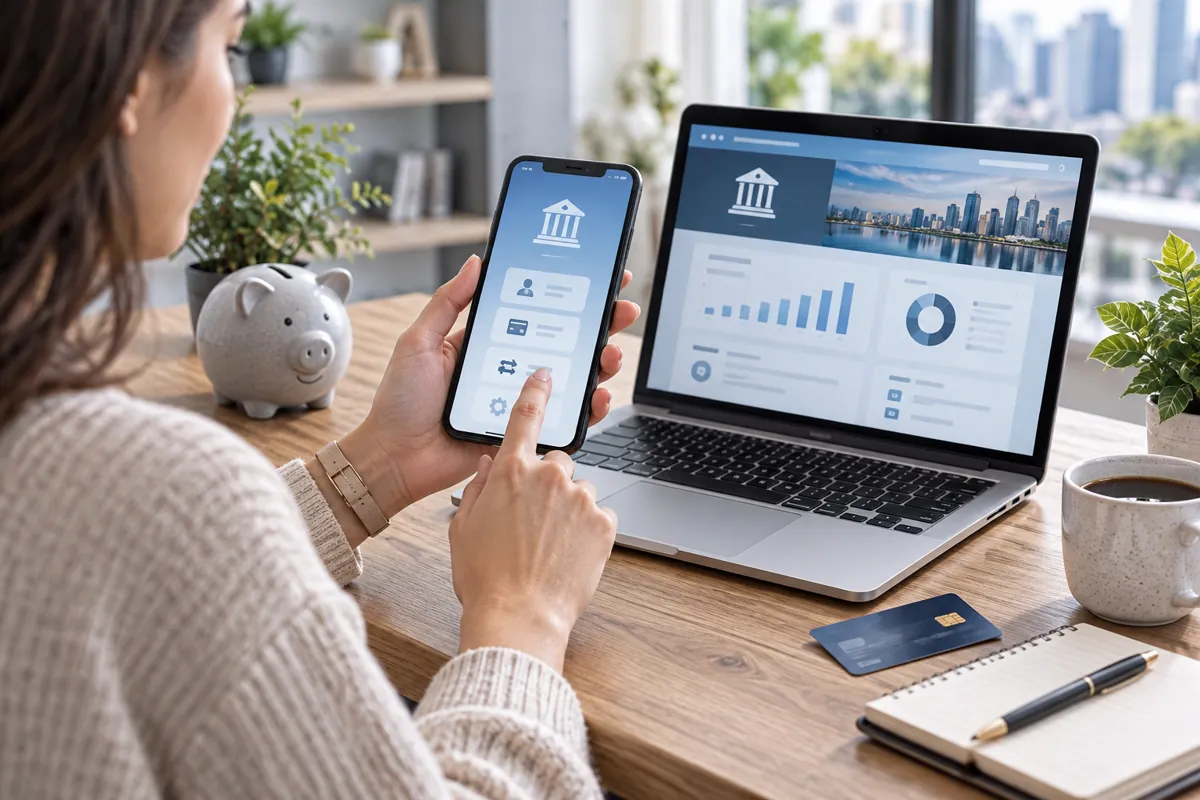
Online and mobile banking have transformed the way individuals and businesses manage finances. From checking account balances remotely to transferring funds instantaneously, these digital platforms provide unprecedented convenience and control. In 2023, over 85% of banking customers in the United States, according to the Federal Reserve, use some form of online banking, demonstrating its widespread adoption.
This shift toward digital finance solutions matters because it reduces reliance on physical branches, cuts operational costs for banks, and enables users to perform transactions from virtually anywhere. As smartphone penetration reaches 82% in developed countries (Pew Research Center, 2023), mobile banking apps are now an essential tool for managing personal and corporate finances efficiently.
Definition and core concepts
Online banking, also known as internet banking, refers to the digital platform that allows customers to conduct financial transactions via a bank’s website or application. Mobile banking specifically enables these interactions through smartphones or tablets, offering on-the-go access. These services include checking account balances, transferring money, paying bills, applying for loans, and more.
Several key terms are associated with online and mobile banking. Authentication involves verification methods such as passwords, biometrics (fingerprint or facial recognition), and multi-factor authentication (MFA) to secure user accounts. Security protocols like Secure Sockets Layer (SSL) encryption protect data transmission, ensuring information remains confidential during exchanges. Banks employ firewalls, intrusion detection systems, and encryption standards to prevent unauthorized access.
A fundamental concept is the customer interface—user-friendly portals that facilitate easy navigation and quick transaction execution. Behind the scenes, application programming interfaces (APIs) connect these interfaces to core banking systems, enabling real-time updates of account information. These systems are built on centralized or cloud-based architectures that handle millions of transactions simultaneously.
How it works
When a user logs into an online banking platform, the process begins with authentication. Entering a username and password triggers verification against stored credentials. Advanced platforms often incorporate MFA, where a code is sent via SMS or generated through authenticator apps, adding an extra layer of security.
Once logged in, the user accesses their dashboard, where they can view account summaries, recent transactions, and available services. Transaction requests are processed through secure interfaces that communicate with the bank's core systems. For example, initiating a fund transfer involves selecting the recipient, entering the amount, and confirming the transaction. This request is transmitted via encrypted channels and processed within milliseconds.
Banks typically use Application Programming Interfaces (APIs) to link the user interface with their core banking infrastructure. These APIs perform functions such as updating transaction logs, checking account status, or applying for loans. Cloud computing platforms like Amazon Web Services or Microsoft Azure enable banks to scale services according to demand, reducing downtime and improving user experience.
Security measures play a critical role. Continuous monitoring detects anomalies—such as unusual login locations or rapid transaction sequences—triggering alerts or account lockouts. In the case of mobile banking, biometric verification offers another barrier against unauthorized access, with fingerprint or facial recognition replacing and supplementing traditional passwords.
Transaction processing speed is vital: real-time updates are standard for most banks, allowing users to see the results of their actions immediately. This is supported by high-speed data centers and optimized application code, ensuring minimal delays. The entire system operates 24/7, with maintenance windows scheduled to avoid disrupting service.
Practical application
Individuals commonly use online banking to check balances—accessed by over 70% of users daily, according to the 2023 Javelin Strategy & Research study. Transferring funds is another frequent activity, with 54% of online banking users making at least one transfer per week. Bill payments via bank portals or mobile apps are used by 80% of consumers, saving an average of 12 minutes per transaction compared to traditional methods.
Small business owners utilize online banking for payroll management, supplier payments, and cash flow monitoring. In the United States, 67% of small firms report using mobile banking apps for at least one financial operation, boosting efficiency and reducing the need for physical bank visits. Cloud-based platforms allow these businesses to integrate banking functions directly with accounting systems like QuickBooks.
Online loan applications and credit management have grown in significance. In 2022, banks processed 40% of all personal loan applications digitally, with approval times dropping from days to hours. This transition accelerates access to credit and simplifies ongoing management through mobile notifications for repayment reminders or rate adjustments.
E-commerce integrated banking solutions enable merchants to accept payments seamlessly. Solutions like integrated payment gateways via mobile apps have seen a 30% increase in usage among small online sellers in the past year. These systems handle thousands of transactions per minute, with fraud detection filters ensuring security.
Investment management has also benefited. Customers can view portfolios, buy or sell securities, and set financial goals online. Robo-advisor platforms, accessible via mobile apps, use algorithms to recommend personalized investment strategies. Assets under management through digital platforms grew by 25% in 2023, reaching approximately $1.2 trillion globally.
In addition, account alerts via SMS or push notifications help users monitor suspicious activity or upcoming payments. This constant connection enables proactive financial management. The integration of biometric security further enhances trust, with studies indicating a 40% decrease in successful unauthorized access when biometric measures are in place.
Common mistakes
Many users overlook the importance of secure login practices. Using weak passwords or reusing credentials across platforms increases vulnerability. Data from the Cybersecurity & Infrastructure Security Agency shows that 64% of account breaches relate to compromised login information.
Another frequent error is neglecting software updates. Failing to install the latest app versions or security patches leaves mobile devices susceptible to malware or exploits. Regular updates often include fixes for vulnerabilities, reducing the risk of unauthorized access.
Some users also ignore multi-factor authentication. Despite its availability, only about 55% of mobile banking users enable MFA, according to Statista, leaving accounts more open to hacking attempts. Additionally, storing login credentials insecurely or sharing access details can compromise security.
Phishing scams pose a serious threat; users often click on malicious links in emails or SMS messages pretending to be bank notifications. Between 2022 and 2023, phishing attacks increased by 21%, emphasizing the need for caution and verification when receiving unsolicited messages.
Expert recommendations
Financial institutions advise enabling multi-factor authentication (MFA) for all online accounts. MFA adds an extra verification step, making unauthorized access significantly more difficult. Biometrics such as fingerprint or facial recognition further strengthen security without compromising convenience.
Users should employ complex, unique passwords for their banking accounts. Password managers can facilitate secure storage and generate strong credentials. Regularly changing passwords—at least every 90 days—is also recommended.
Keeping devices updated is essential; installing the latest operating system and app updates patches known vulnerabilities. Avoiding public Wi-Fi when accessing sensitive banking information drastically reduces the risk of interception. Using a virtual private network (VPN) provides added encryption on unsecured networks.
Finally, monitoring accounts frequently—checking transaction history and alerts—is vital for early detection of unauthorized activity. Customers should report suspicious transactions promptly. Banks that utilize real-time fraud detection systems can block fraudulent activity within seconds, minimizing potential losses.
Conclusion
Online and mobile banking have become integral to personal and business finance management. They offer speed, convenience, and a range of services that were unimaginable a few decades ago. With over 80% of users engaging with these platforms regularly, their importance will only grow.
Ensuring security through strong authentication, current software, and vigilant monitoring remains critical. As technology advances, users and institutions must adapt to protect sensitive financial information while enjoying the benefits of digital banking solutions. Accurate implementation and responsible usage can significantly reduce risks and improve the financial experience overall.